
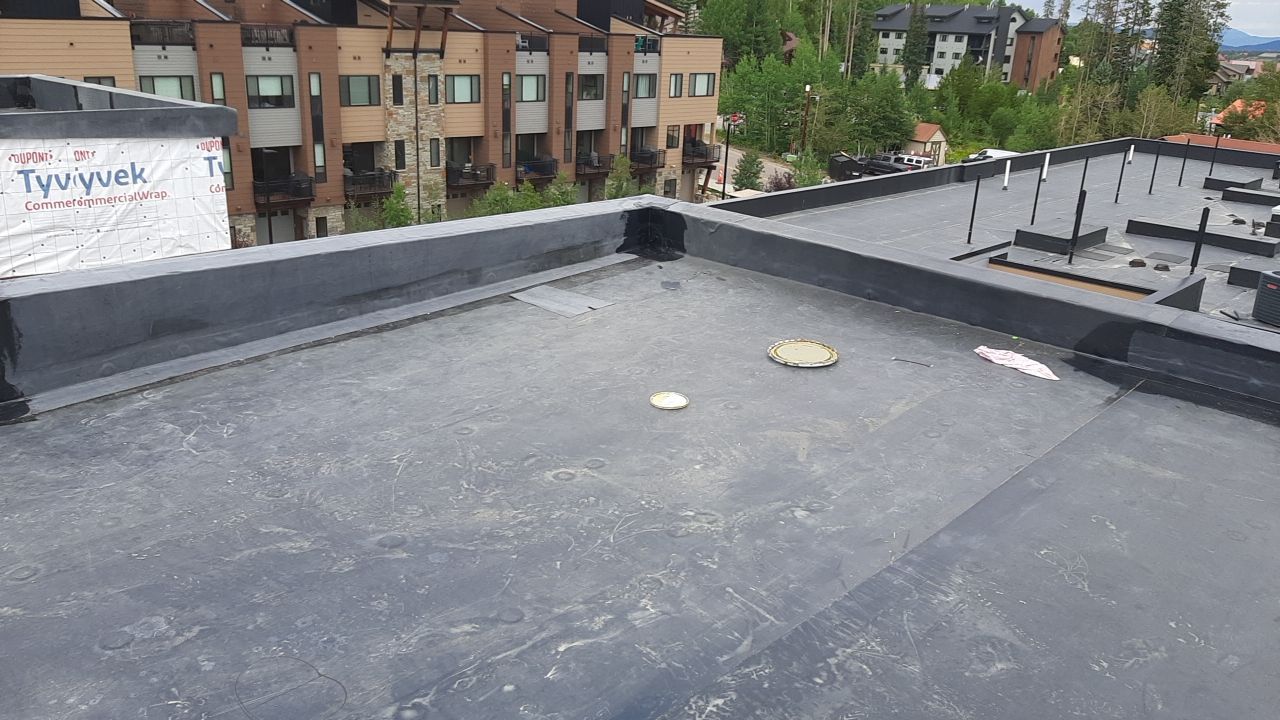
Why Flat Roofs Are a Smart Choice for Mountain Climates
When designed and installed correctly, flat roofs provide a unique and modern beauty to a home or business. Additionally, when properly maintained, flat roofs are a more durable option than pitched roofs. But if not built or maintained correctly, flat roofs are more susceptible than pitched roofs to damage.
For instance, when not properly insulated during installation, flat roofs are more likely to endure ice dams in the winter. Flat roofs don’t have the attic space that traditional pitched roofs offer. Without that space, heat from your home is likely to melt the snow on your roof – which then refreezes at the cooler edges of your roof forming ice dams.
With nearly five decades of roofing experience, The Roofing Company are experts in the building science of roofing. Our team has the systems and tools to ensure your flat roof is built and maintained the right way. You’ll have the freedom to enjoy your ideal roof with the peace of mind of knowing it was built to the highest standard.
When it comes to building or renovating a home or commercial structure in a mountain region, the roof plays a critical role in protecting the property from harsh and variable weather. While pitched roofs are common, flat roofs are increasingly proving to be a smart, strategic choice for mountain climates. Here’s why:
Optimized for Snow Management
In many mountain areas, snowfall is heavy and persistent. Flat roofs allow for easier installation of snow retention systems and controlled snow melt. Properly designed flat roofs with slight slopes and efficient drainage prevent dangerous ice dams and allow snow to be removed mechanically if needed—minimizing the risk of damage.
Durable and Built to Withstand Extremes
Modern flat roofing systems use high-performance materials like TPO, EPDM, and PVC that are engineered to resist moisture, UV rays, and temperature fluctuations. These membranes can expand and contract with extreme mountain weather, making them a resilient option in alpine conditions.
Energy Efficiency in Changing Weather
Flat roofs can be built with added insulation and reflective surfaces that regulate interior temperatures year-round. In mountain climates where temperatures shift quickly, this can mean lower energy costs for both heating and cooling.
Functional and Flexible Space
Flat roofs provide valuable usable space—whether it’s for solar panel installation, a rooftop deck to enjoy the mountain views, or even HVAC units in commercial settings. In mountainous terrain where land is limited or sloped, this added utility can be a game changer.
Easier Maintenance and Access
Accessing and maintaining a flat roof is significantly easier than working on steep slopes. Whether clearing snow, repairing a membrane, or inspecting for damage, flat roofs are safer and more practical for property owners and roofing professionals alike.
Conclusion:
Flat roofs, when properly designed and installed for mountain conditions, offer strength, versatility, and long-term performance. From managing snow loads to creating usable space and increasing energy efficiency, flat roofs are more than just a modern aesthetic—they’re a practical solution tailored for life at high altitudes.
If you’re building in a mountain region, consider a flat roofing system designed to match the terrain and climate. Your structure—and your budget—will thank you.
Connect with us to learn more about all our products and services www.theroofingco.com
Contact our team at 970.887.0104 or email sales@theroofingco.com